


At 73, I’m finding that many of my old fillings are failing. After placing a crown on my upper second molar, my dentist found a cavity and crack in the neighboring first molar and recommended another crown. They seem to do good work, but I’m worried I could still need a root canal later. When is it better to extract a tooth instead of restoring it with a crown or root canal? – Thanks. Lois
Lois,
Losing upper molars without replacing them can eventually create long-term problems, regardless of your age.
If upper molars are extracted and left unreplaced, the lower molars can gradually drift upward into upper spaces where teeth are missing. This can change the way the teeth fit together and affect the bite. Also, chewing may become limited to one side of the mouth, placing extra stress on teeth and muscles. So, a discussion about extracting these teeth should also include a plan for replacing them.
How Do Dental Implants and Root Canal Treatment Compare?
Dental implants and root canal treatment have excellent long-term success rates. Modern root canal treatment, particularly when performed by an endodontist, is very reliable. Dental implants are highly successful and may have a slightly lower risk of failure. However, if an implant does fail, correcting the problem is usually much more involved, often requiring additional surgery and bone grafting.
Cost is another important consideration. In many cases, the cost of a root canal and crown is one-third less expensive than an implant and crown.
Whenever a healthy tooth can be preserved, many dentists believe saving the natural tooth is the better choice.
What Are the Pros and Cons of Each Option?
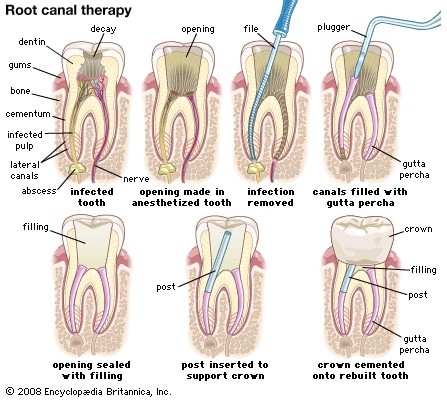
Root canal treatment
Choosing between root canal treatment and a dental implant involves more than considering success rates. Recovery time, cost, and future treatment needs all deserve consideration.
Dental Implant and Crown
- Costs about 50% more than a root canal and crown
- Requires at least three months for the implant to fuse with the jawbone before the final crown is placed
- Can be more reliable over the long term
- Can be much more complicated and expensive to repair if it fails
Root Canal and Crown
- Generally costs less
- Can often be completed in two or three weeks over several appointments
- Has a small risk of future failure, which could require replacing the tooth with an implant later
- Preserves the natural tooth without placing an artificial fixture into the jawbone
Are Your Teeth Likely to Need Root Canal Treatment?
If you are not experiencing unusual sensitivity or an infection, you may not need root canal treatment. However, there is a small possibility that a tooth receiving a crown could eventually require a root canal.
Removing healthy teeth simply because they might need root canal treatment in the future is difficult to justify. Also, preserving natural teeth still offers important advantages over extracting and replacing them with implants.
The Monroe, Louisiana, dentists at Bayou Dental Group sponsor this post. Please read how Dr. Finley and his team strive to offer some of the best dental care in Monroe.