

I had a root canal and crown in March 2026. Within a few weeks, the tooth started hurting. My dentist took an X-ray but didn’t see any cracks or other obvious problems, so he referred me to an endodontist.
The endodontist prescribed antibiotics, and when I returned two weeks later, most of the pain was gone. She said the tooth should keep improving. I went on vacation in July and had no problems.
A couple of days ago, though, I woke up with a severe toothache. I saw the endodontist the next day, and she prescribed steroids. I’m still in a lot of pain, and the tooth keeps throbbing and pulsing. What could be causing this much pain after a root canal? Thanks. Cecil from MI
Cecil,
Steroids can help certain types of root canal pain, but the timing and cause matter. Based on the history you describe, we are concerned about a persistent or recurring infection rather than inflammation alone.
Steroids are powerful anti-inflammatory medications. They reduce inflammation, but they can also suppress part of the body’s immune response to infection. So, a dentist or endodontist must determine whether the pain comes primarily from inflammation, infection, or another problem before deciding on treatment.
Why Might a Tooth Hurt Immediately After Root Canal Therapy?
Some inflammation around the tooth root is common shortly after root canal treatment. During treatment, infected debris, disinfecting solution, or filling material can sometimes irritate the tissues beyond the end of the root. Root canal instruments may also irritate these tissues.
That inflammation can create a cycle of discomfort. Swelling around the root can make the tooth feel slightly elevated, so it hits harder when you bite. The added pressure can increase inflammation and pain. Steroids may help in this situation. Depending on the circumstances, a dentist may also consider antibiotics if there are signs of infection.
Why Is Pain Several Weeks After Root Canal Treatment Concerning?
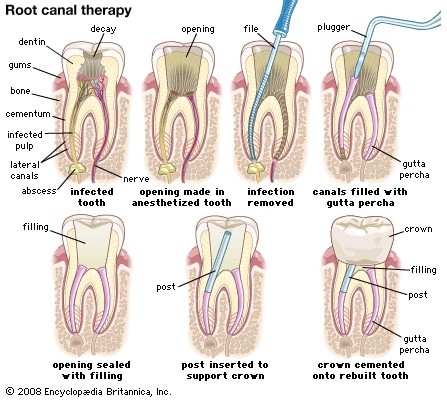
Root canal treatment
Pain that develops several weeks after root canal treatment raises a different concern. At that point, irritation directly caused by the procedure is less likely to explain a new flare-up.
You said the first episode improved after antibiotics. Although improvement with antibiotics does not prove the source of the problem, the delayed pain and response to treatment may suggest an infection. Another severe episode makes it important to find out why the tooth keeps flaring up.
Root canal systems can be complex. Even with careful treatment, bacteria can sometimes remain in areas that are difficult to locate, clean, or seal.
What Can You Expect?
We recommend another endodontic evaluation rather than continuing to treat the symptoms without identifying their source. Your endodontist may need new imaging and other tests to determine whether the previous root canal can be saved.
Depending on what the examination shows, treatment options may include:
- Root canal retreatment to clean and seal the tooth again
- Root canal surgery to treat infection around the end of the root
- Extraction if the tooth cannot be predictably saved
The appropriate choice depends on what is causing the pain and whether the tooth is otherwise restorable.
Does a Dental Crown Make Root Canal Retreatment More Difficult?
A crown can make root canal retreatment more complicated, although endodontists routinely treat teeth through existing crowns. The dentist may need to open the crown to reach the canals, which can reduce visibility and may sometimes affect the crown itself.
Given your severe, recurring pain, we would consider getting another endodontic opinion. The goal is to determine why this tooth keeps hurting and address the source rather than repeatedly treating each flare-up.
The Monroe, Louisiana, dentists at Bayou Dental Group sponsor this post. Please read how Dr. Finley and his team strive to offer some of the best dental care in Monroe.