


I’m concerned about the six upper crowns I had placed on my front teeth last November. The first temporary crowns felt very poor and seemed to be leaking. I told my dentist I was worried about infection. He removed them, treated the teeth with fluoride, and prescribed antibiotics, but didn’t say I needed anything further, like a root canal.
When my dentist first put the crowns on my teeth, my bite felt way off, and the dentist had to file them down a lot to get them adjusted. They felt okay for a short time, but then it seemed like fluid was getting through the crowns, so my dentist sent them back to the lab. I ended up wearing temporaries again, which fit better than the first ones.
Now I’ve had the new crowns for about two weeks, and the dentist will cement them next week, but I’m having burning gums, tooth sensitivity, and I’ve noticed what seems like a hole on the back of one of my front teeth. I’m scheduled to make them permanent next Friday, but something still doesn’t feel right to me. What could be causing these problems? – Thanks. Hailey from IL
Hailey,
You should feel completely comfortable with the new crowns before a dentist permanently cements them. Once the dentist bonds crowns permanently, removing them becomes much more complicated.
If you have concerns right now, it is reasonable to pause. We recommend calling your dentist on Monday and explaining that you would prefer to keep the crowns temporarily cemented until you are confident everything feels right.
Why a Dentist Should Identify the Cause of Burning Gums
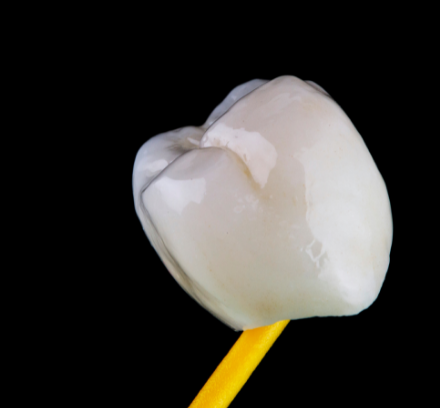
Dental crowns should feel comfortable
The burning sensation you described in your gums is something your dentist should evaluate carefully. Understanding the type of crown material used will be an important first step.
Different crown materials can affect patients differently, especially when metals are involved.
Your dentist should review several key factors:
- Whether the crowns are porcelain fused to metal. Some people are sensitive to certain dental metals.
- The exact metal alloy used. The dental lab provides an Identalloy certificate listing the metals in the crown.
- Nickel content. Nickel can trigger allergic reactions in some patients. If nickel is present, a different material may be more appropriate.
If your crowns are all-ceramic, your dentist should still investigate other possible causes of the burning sensation.
Some Treatment Details Deserve a Closer Look
You also mentioned a few things that would make me want to review the case carefully. Restoring six front teeth with crowns is far more complex than placing a single crown. It requires careful cosmetic planning and precise control of the bite.
Several details you mentioned could benefit from further evaluation.
- Your bite feels significantly misaligned. Minor adjustments are normal, but ideally, only small refinements are needed.
- Fluoride is placed on prepared teeth. Fluoride helps remineralize enamel but does not kill bacteria.
- Concerns about leaking temporary crowns. If bacteria were involved, antibacterial agents such as chlorhexidine or peroxide would typically address that issue.
These points suggest that taking extra time to evaluate everything carefully would be wise.
What Are Your Options?
One approach that often works well is to keep the crowns temporarily cemented while you get a second opinion. Temporary cement allows another dentist to remove and evaluate the crowns if necessary.
You may want to ask a dentist with experience in cosmetic dentistry to review the case. They can evaluate the crown contours, the bite, and your gum health before anything becomes permanent. When a crown is done properly, it should blend naturally with your bite and feel comfortable enough that you forget it is there. Taking a little extra time now can help ensure you reach that outcome.
The dentists in Monroe, Louisiana, at Bayou Dental Group sponsor this post. Please read how Dr. Finley and his team strive to offer some of the best dental care in Monroe.